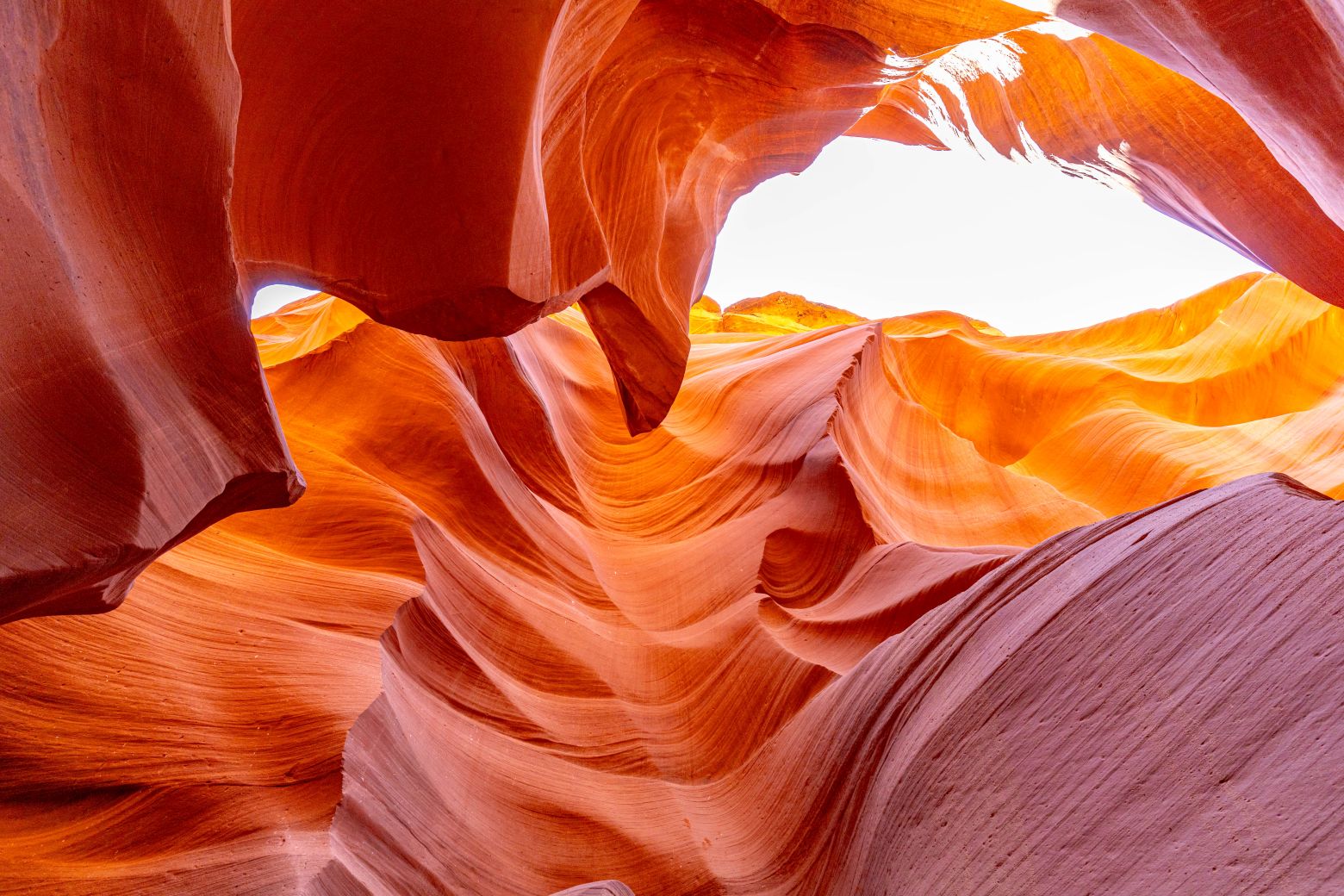
Antelope Canyon is known for its narrow sandstone corridors, soft curves and changing light. It is a more enclosed and sculptural landscape than the big-view canyon stops, which makes it feel very different from the open panoramas of the wider Southwest.
The visual impact comes from the way water shaped the rock into flowing, wave-like walls over a long period of time. That is why the canyon often feels less like a normal hiking location and more like a moving sandstone sculpture. Even people who already know the famous photos are often surprised by how narrow, layered and textured the canyon feels in person.
A practical point matters here: you do not simply walk in on your own. Access is managed through Native-operated tours, and you need to book a guided visit in advance. That guided structure is part of the experience, because the canyon is on Navajo land and visitor access is controlled accordingly.
This also means timing matters more than at many other stops. Tours can fill up, seasonal conditions influence the type of light you get, and the pace is naturally shaped by the group. If you want the experience mainly for photography or video, it is worth treating the booking time as part of the planning process rather than as a small detail.
If your schedule is flexible, midday in summer is usually the most attractive time for photography and video because the light reaches deeper into the canyon and the famous warm glow becomes more visible. Around that time the walls can look especially rich in orange, red and golden tones, and the reflected light becomes part of the whole visual effect.
That contrast is exactly why the stop works so well in a road trip: after wide desert and plateau scenery, Antelope Canyon gives you a compact, almost abstract rock environment with strong color and texture. It is one of those places where a short visit can still feel very dense and memorable because the landscape is so concentrated.
Why it is worth a stop
- Distinctive slot canyon walls shaped by water and sandstone erosion
- Access is by guided Native-operated tour, not by independent walk-in entry
- Advance booking matters because tour times directly affect the light conditions
- Midday summer visits usually offer the strongest light effects and color play
- Very high photography value despite being a relatively compact stop
- Excellent combination with Page-area viewpoints and lake stops
Map reference: Antelope Canyon, Arizona